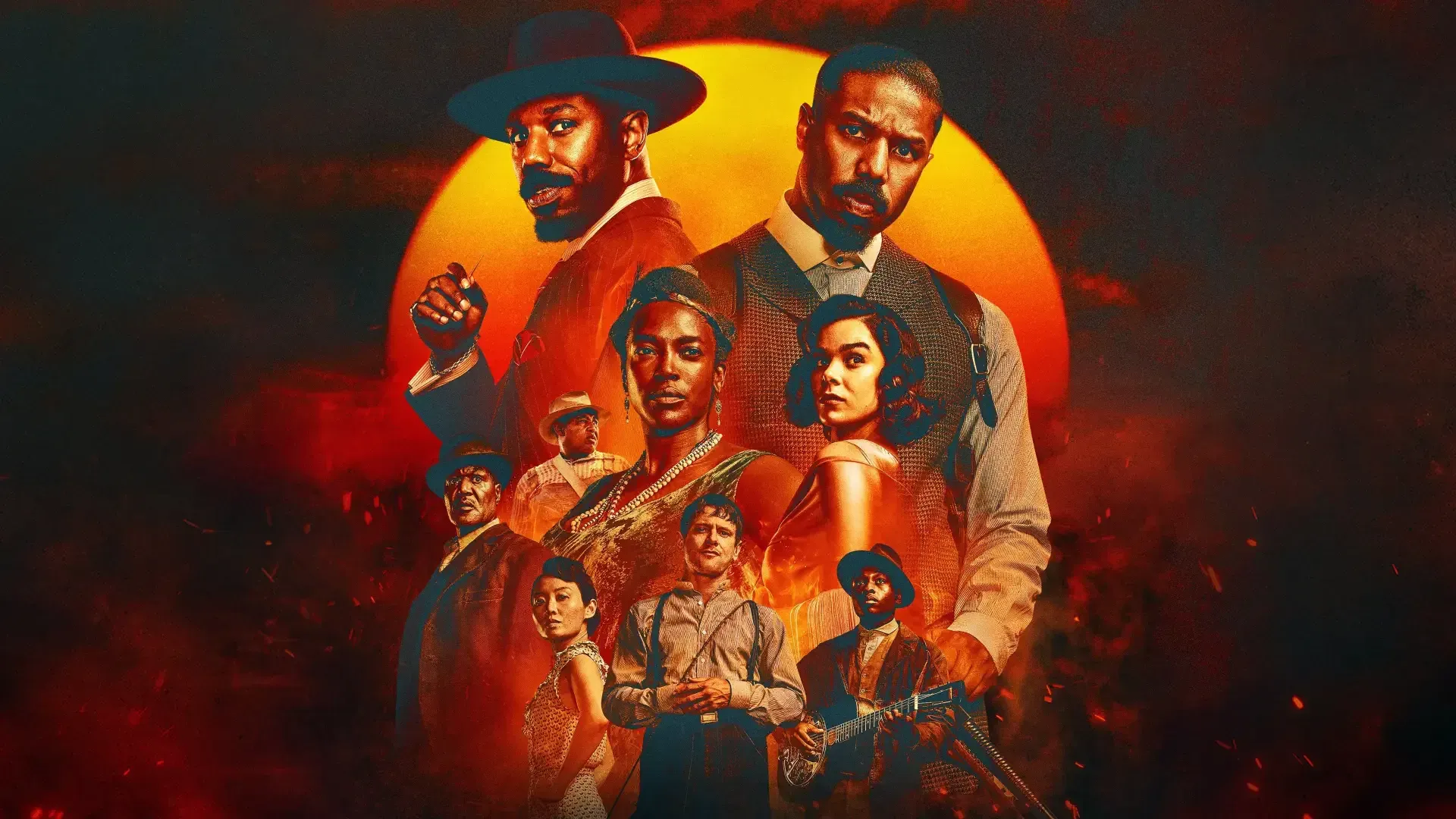
There’s a subtitled cut of Sinners where the runtime is the same, but the point is completely gone. I watched it so you don’t have to.
If you haven’t yet seen Sinners, this is your cue to go watch Sinners. Not only because it’s a very good film, but because I’m going to spoil it.
Cool? Cool.
So, Sinners is a vampire musical. Yes, that sounds weird, but it makes more sense than you’d think going into it.
Sinners is about a lot of things, but fundamentally, Sinners’ core thesis revolves about racism and assimilation—shown in the dichotomy between Caucasians and Africans / Asians / “Others”, and hammered down further between vampires and humans.
Americans appropriate blues music while enslaving and abusing its creators.
African-Americans adopt the religion of their oppressors to be accepted, going as far as to impose it on their kin.
Vampires preach “love and fellowship” -through a hive mind that merges consciousnesses- an invitation for unity at the cost of your free will.
Vampires are drawn to music because it represents POWER.
They aren’t into music as an art form, but interested in what it carries: memory, culture, heritage, the power to attract and unify.
Joining the vampire hive mind is assimilation in the most literal sense: you give up a piece of yourself to dissolve into the collective. Their goal is pretty explicit, and it’s to absorb Sammie’s blues talents so they can assimilate and repurpose his music for their own ends.
𝐓𝐡𝐞 𝐀𝐫𝐚𝐛𝐢𝐜 𝐬𝐮𝐛𝐭𝐢𝐭𝐥𝐞𝐬 𝐟𝐨𝐫 𝐒𝐢𝐧𝐧𝐞𝐫𝐬 (𝐀𝐩𝐩𝐥𝐞 𝐓𝐕 𝐯𝐞𝐫.) 𝐜𝐨𝐦𝐩𝐥𝐞𝐭𝐞𝐥𝐲 𝐠𝐮𝐭 𝐭𝐡𝐢𝐬.
• Every mention of the devil turns into “الشر”=“evil”.
• Dialog referencing “the religion they forced on us” is heavily distorted.
• Racial slurs are ignored or toned down—even when uttered by literal Klan members.
• The title itself was translated to “خطَّاؤون”=“wrongdoers” instead of “آثمون”=“Sinners”.
What’s more baffling is that Sinners is an +R rated film, so we get to see a teenager go down on a married woman but not plot crucial slurs.
It did get comical after a point, but I wasn’t laughing.
Because this is way more common than it should be in Arabic translations.
Because Arabic translations tend to be more obsessed with risk management than authorial intent.
Examples like these are why I’m so hard-line about censorship in my work.
Cultural adaptation has limits. At a point you, have to accept that some things can’t be patched over.
Not everything is for everyone, and that’s okay.
Ironically, this translation does ends up reinforcing the film’s theme about the harms of co-opting and appropriating another’s culture—just in its own weird little way.
By Seif Chaib.
Originally posted on Linkedin.